
The UK's post-study work visa, known as the Graduate Route, is about to get shorter. If you are a Nepali student planning to graduate from a UK university in 2026 or early 2027, the exact date you apply could cost you six months of work time in the UK. Here is what changed, why, and what it means for your timeline.
What Is Changing
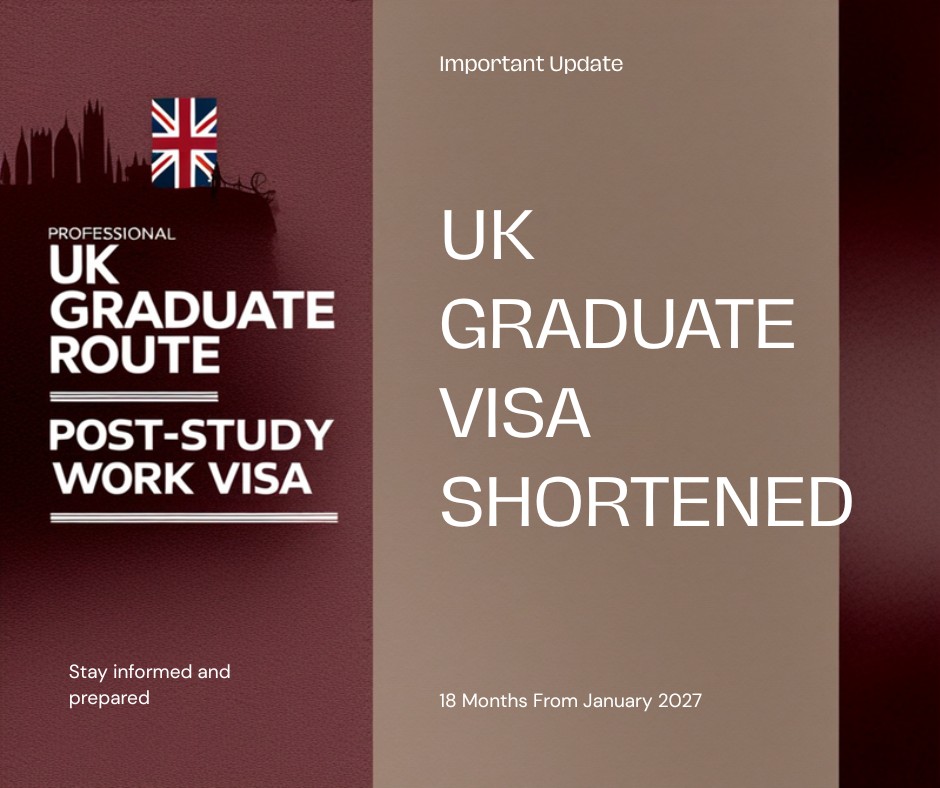
From 1 January 2027, the standard Graduate Route visa will be shortened from two years to 18 months for bachelor's and master's graduates. PhD graduates are not affected and keep their existing three-year allowance. This is confirmed by Freeths, a UK business immigration law firm, and by Queen Mary University of London's Legal Advice Centre.
The change was first proposed in the UK government's May 2025 white paper, "Restoring Control Over the Immigration System," and was formally confirmed through a Statement of Changes in Immigration Rules published in October 2025. The stated goal is to push graduates toward skilled employment or a sponsored route, such as the Skilled Worker visa, faster than before.
The Transition Window That Matters Most
There is a specific cutoff that current and prospective students need to know: students who complete their degree and apply for the Graduate Route by 31 December 2026 still get the full two years under the old rules. Anyone who applies from 1 January 2027 onward gets 18 months instead, even if they graduated in 2026.
This means the timing of your graduation and your visa application, not just your enrollment date, decides how much post-study work time you get.
Graduate Route Timeline, Old vs New
- Bachelor's/Master's, applied before 1 Jan 2027: 24 months.
- Bachelor's/Master's, applied from 1 Jan 2027: 18 months.
- PhD, any application date: 36 months, unaffected by this change.
A Second Change: Digital-Only Visas
Separately from the Graduate Route change, the UK has been moving to fully digital immigration status. From 25 February 2026, most successful visa applicants receive only a digital visa (an eVisa) linked to their passport through a UKVI online account, rather than a physical vignette or biometric residence permit, according to IDP Education's 2026 UK visa guide. If you are applying for any UK visa now, including the Graduate Route later, you should set up and verify your UKVI account early rather than waiting until travel, since airline check-in and border checks now rely on that digital record.
What This Means for Nepali Students
- If you graduate in 2026: Apply for your Graduate Route visa before 31 December 2026 to lock in the full 24 months, rather than delaying into January 2027 and losing six months of eligible work time.
- If you are choosing a UK master's program to start in 2026: Check your expected graduation date against the cutoff. A one-year master's starting in September 2026 typically finishes around September 2027, which falls after the cutoff, so factor the 18-month figure into your planning rather than assuming two years.
- If you are already in the UK on a Graduate Route visa: This change does not shorten a visa you already hold. It only affects new applications made from 1 January 2027 onward.
- PhD applicants: The three-year Graduate Route allowance is unaffected by this change, making a UK doctorate comparatively more attractive under the new rules.
How to Use Your Graduate Route Time Well
- Start job searching in your final academic term, not after graduation, so your Graduate Route clock starts with momentum rather than a slow first few months.
- Target Skilled Worker sponsors early. With 18 months instead of 24, identifying employers who hold a sponsor licence for your field should begin well before your course ends, not after.
- Track your UKVI eVisa account status from the moment you receive it, since digital-only records mean any account access issue can affect travel and right-to-work checks.
Why the UK Cut the Graduate Route in the First Place
The change did not happen in isolation. UK net migration figures rose sharply after the Graduate Route launched in 2021, and a significant share of graduate visa holders were found to move into lower-skilled work rather than the graduate-level roles the route was designed to lead toward. The May 2025 white paper framed the 18-month reduction as a way to keep the route focused on genuine skilled-employment transitions, pairing it with tighter sponsor compliance checks on the employer side. For Nepali students, the practical takeaway is that the UK government is watching outcomes, not just enrollment, so a clear plan to move into your field of study matters more than it did in 2021.
Choosing Between the UK and Other Destinations Under the New Timeline
Eighteen months is still a meaningful amount of post-study work time, comparable to what several European destinations offer and longer than some Asian alternatives. The real question for Nepali students is less "UK or not" and more "can I realistically secure Skilled Worker sponsorship within 18 months." That depends heavily on your field: fields with recognised UK skills shortages, such as engineering, IT, healthcare, and some finance roles, tend to have a wider pool of sponsor-licensed employers, which shortens the realistic search window. If your field is narrower, weigh the UK against options like South Korea's D-2 visa or Canada's PGWP route, both of which currently offer longer or differently structured post-study work windows.
Practical Timeline for a 2026 UK Master's Applicant
- Now to application: Confirm your program's exact completion date and cross-check it against the 31 December 2026 cutoff before accepting an offer.
- During your final term: Build your CV and start applying to Skilled Worker sponsor employers in your field, rather than waiting for graduation.
- At course completion: Ask your university exactly when they will confirm completion to the Home Office, since your Graduate Route application clock starts from that confirmation, not your last exam date.
- Within your Graduate Route period: Treat the first 6 months as your primary sponsorship search window, leaving a realistic buffer before the visa's remaining time starts to work against you in interviews.
Frequently Asked Questions
Does the 18-month rule apply retroactively to people already on the Graduate Route?
No. It only applies to new Graduate Route applications submitted from 1 January 2027 onward. Visas already granted keep their original length.
Can I apply for the Graduate Route before I actually finish my course?
You can only apply for the Graduate Route after your university confirms your successful course completion to the Home Office. Talk to your university's international student office early about how quickly they report completion, since that affects how fast you can submit your application relative to the 31 December 2026 cutoff.
Does this affect my ability to apply for the Skilled Worker visa afterward?
No, the Skilled Worker visa route itself is unchanged. The Graduate Route change simply shortens how long you have to find a sponsor before you need to switch to a different visa category.
Is it still worth choosing a one-year UK master's given this change?
Yes, for most students. Eighteen months of legal work rights after a one-year, relatively affordable master's is still a strong outcome compared to many alternative destinations, provided you plan your job search early.
Does the Graduate Route change affect the cost of studying in the UK?
Not directly. Tuition and living costs are set separately from immigration rules. However, a shorter post-study work window changes the return-on-investment calculation for expensive programs, since you have less time to earn UK wages before needing sponsored status, which is worth factoring into your overall budget decision.
If your graduation date is close to the end of 2026, this is worth discussing with your university and an immigration adviser now, since applying a few weeks earlier or later could mean the difference between 18 and 24 months in the UK. For comparisons with other destinations, see our guide on studying in Japan, or browse all our study abroad guides.